

Trip Highlights
• Comprehensive visits to 'Torres del Paine' and 'Los Glaciares' National Parks.
• Visits to Otway Sound, Mylodon Cave and Tierra del Fuego.
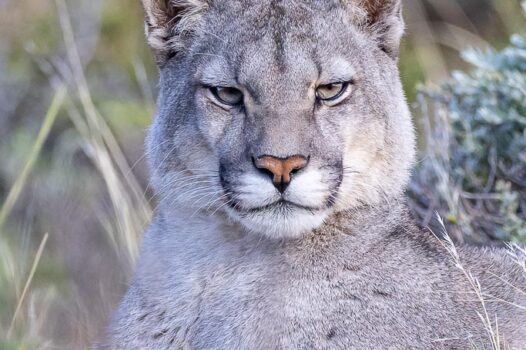
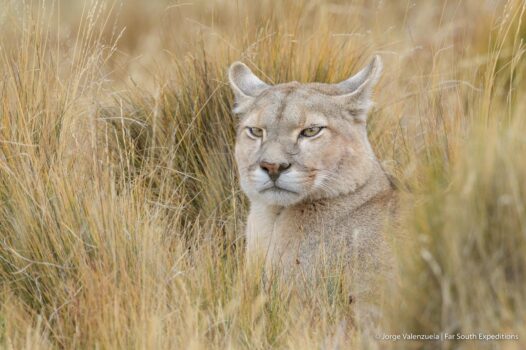
• An incredible array of wildlife, ranging from Andean condors to guanacos, from flamingoes to penguins, from pumas to dolphins and sea lions.
• A study of the rich cultural history (and pre-history) of Patagonia and Tierra del Fuego; as well as the history of exploration from Magellan onwards.
• Ferry journeys across the mythic Straits of Magellan.
• A remarkable and unique array of flora for the plant enthusiasts, including the Nothofagus beech forests, the southernmost in the world.
• Ideal journey for nature photographers (of all levels) as well as nature enthusiasts.
This program is operated as a scheduled departure, leaving on a set date.
A custom trip (flexible option which runs on a date you choose giving you more privacy) is available upon request for individuals or small private groups.
The Difference of Traveling with FS Expeditions:
• Good accommodation at nature lodges, great dinning cuisine and memorable picnic lunches.
• Spacious vehicles that ensure a window seat to each trip participant.
• Each of our trips have a maximum of 6 participants.
• Each vehicle and driver we use has been authorized by the Chilean and Argentine Transportation Authority.
• The service and expertise of a professional local naturalist leader, who will look after every logistical aspect of 'your' holiday.
• You will receive a free, signed copy of one of our great natural history books for Patagonia.
• …plus an useful pre-departure information package (maps, wildlife checklists and more).
Patagonia Explorer can be combined with one of the following optional extensions:
• The Falkland Islands (8 days, 7 nights), encounters with penguins and other fascinating wildlife of the 'Galapagos' of the South Atlantic,
• Expedition cruise to Tierra del Fuego & Cape Horn (4-5 days), follow Darwin's footsteps across the most remote corners of Patagonia on the wake of the 'Beagle',
• Atacama Desert Explorer (6 days, 5 nights), unique private photo safari to discover the wildlife and landscapes of the world's most arid desert.
Option A - Starts: El Calafate, Argentina - Ends: Punta Arenas, Chile
Day 1 • Reception at El Calafate (FTE) Airport (before 11am) – Afternoon visit to Perito Moreno Glacier ('Los Glaciares' National Park)
Your guide will be meeting you at the airport (before 11am) or will pick you up at your hotel at El Calafate. After that, you will be heading towards 'Los Glaciares' National Park, where you will enjoy of breathtaking views of the most famous glacier in Patagonia, the majestic 'Perito Moreno'. You will be marvelled by its endless cracking noises; this ice cathedral is surrounded by Magellanic forests with 'Lenga' (Nothofagus pumilio) and 'Coihue de Magallanes' (N. betuloides) growing so close to the ice that sometimes seems to touch each other. It is certainly astonishing to find Canelo (Drymis winteri), Notro (Embothrium coccineum) - a Protea related tree/bush - plus other species from rather tropical origin, like orchids, facing the glacial front. We expect to see soaring Condors in the area as well as Magellanic Woodpeckers and other charismatic birds of the Patagonian sub-Antarctic woodlands.
Overnight at Hotel Kau Yantun (4*), El Calafate. (L,D)(G).
Day 2 • Full day exploring Lago Argentino and 'Estancia Cristina' ('Los Glaciares' National Park)
Today we will have the extraordinary opportunity to explore the northernmost part of the huge 'Argentino' Lake. We will start our day with a transfer to Puerto Bandera in order to take our boat; we will cruise, during the whole morning, the gelid waters of the lake, seeing impressive icebergs to eventually have fascinating views of the front of 'Upsala Glacier'. We will arrive to Estancia Cristina by noon time and will have the whole afternoon to explore the surroundings with 4x4 vehicles. We will enjoy of short hikes to some viewpoints where we can see part of the Southern Patagonian Icefield and the imposing Andes summits.
Overnight at Hotel Kau Yatún (4*), El Calafate (B,L,D)(G).
Day 3 • El Calafate – Drive to Cerro Castillo and 'Torres del Paine' National Park
Early in the morning you will have a private transfer to Cerro Castillo, in Chile, in order to continue towards Torres del Paine, Patagonia’s premier wildlife destination. At the eastern corner of Sarmiento Lake, we will reach a location that commands the most incredible views of the towering peaks of 'Las Torres' (the 'towers'), the pinnacles from which the park takes its name. As we move around the park, you shall observe confiding herds of Guanaco, most southerly camelid, the curious-looking Lesser Rhea and our first Andean Condors along the road.
Overnight at Hotel Las Torres (4*) or similar, Torres del Paine. (B,L,D)(G).
Day 4 • Torres del Paine National Park (western side) – Boat trip to Grey Glacier (c. 3 hours)
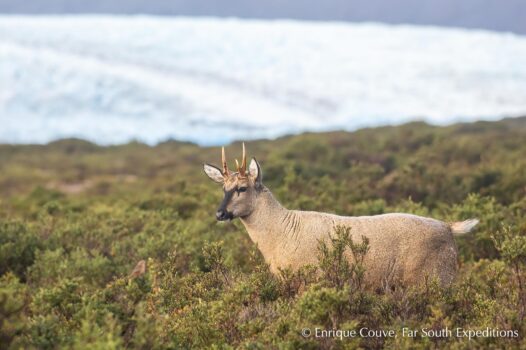
Today we will explore the southern and western regions of this huge national park, which comprises in total an extent of 600,000 acres (242,000+ hectares). The landscape is dominated by the omnipresent 'Paine Massif', a magnificent set of rugged peaks, formed out of granite and sedimentary rock. The long-gone Indians of Patagonia gave the name Paine, meaning “blue”, presumably referring to its remarkable colouration when observed at a distance. We will have the opportunity to explore the Nothofagus or southern Beech forests to study its diversity of plants and animals; we will try to see Magellanic Woodpecker, Austral Parakeet and the shy Andean Deer or Huemul, if we are lucky. We will be marveled by seeing the contrasting mosaic of towering mountains, glaciers, wetlands, steppes and forests.
'Lago Grey' is certainly one of the highlights of the day. Colosal icebergs are stranded on the southern shore of the lake after a long and slow transit from the glacier front. From this shore we will board our boat (the M/V Grey II) for a 3-hour excursion through the icy waters of the lake towards the impressive and actively calving front of the Grey Glacier. 'Grey' is one of the nearly 50 outlet glaciers which originate from the massive Southern Patagonian Ice Field, world's third largest after Antarctica and Greenland, and is one of the most beautiful and colourful in all Patagonia. The front is full of crevasses and the solid glacial ice colors vary from whitish to deep indigo. The glacier is flanked towards the east by impressive granite walls which are part of the Paine Massif, and towards the west by the eroded and low summits of the older Andes. The photography is great at this particular spot. We will be treated with a glass of 'pisco sour' or 'scotch' containing glacier ice of hundreds, possibly thousand years old!
This evening we will have again an optional photo outing for sunset and the dramatic cloud formations.
Overnight at Hotel Las Torres (4*) or similar, Torres del Paine. (B,L,D)(G).
Day 5 • Torres del Paine National Park (eastern side) – Laguna Amarga and Laguna Azul
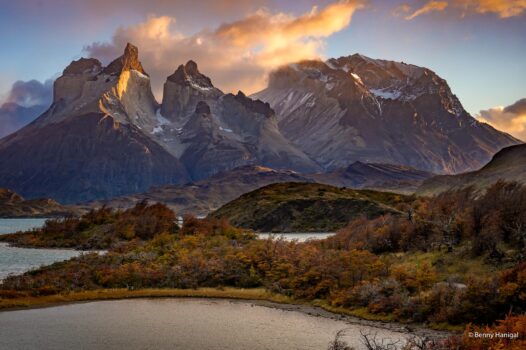
This morning we will have again an early start in order to photograph the 'Horns' (Los Cuernos) at dawn. With the right lighting, the mountain base turns into orange colors and the scene become very dramatic with peculiar lenticular clouds moving fast over the peaks. During the morning we will visit the eastern side of the park to enjoy the views of one of the impressive waterfalls of Paine river and if is clear, of the fabulous granite columns of the Paine massif from Laguna Amarga. After our picnic, we will keep exploring the alkaline ponds and reed-fringed lagoons located of the eastern part of the park. There are approximately 120 species of birds in the park and we will see a considerable number of them, with the help of binoculars and spotting scopes. Also the flora is a very interesting subject for observation and photography. The park holds nearly 500 species of plants; the southern spring and early summer (mid-October through late January) is a great period of the year to see the myriad of flowers that bloom in these magnificent mountain landscapes. After our return to the hotel and enjoy our delicious dinner, we will have another chance to photograph the mountains and clouds at sunset.
Overnight at Hotel Las Torres (4*) or similar, Torres del Paine. (B,L,D)(G).
Day 6 • Visit to Mylodon Cave Natural Monument – Lunch at a sheep farm (shearing show and barbecue) – Punta Arenas
We will leave the park early in the morning, after enjoying our last 'dawn photo session' of the Paine mountains. Later we will visit 'Mylodon Cave' Nature Reserve, an outstanding natural formation that sheltered a large number of long-gone Pleistocene mammal species, including the Giant Ground-Sloth or Mylodon, about 12,000 years ago when most of the surrounding area was covered by glaciers. Then, we will head towards the picturesque coastal town of Puerto Natales, where there are are gorgeous vistas of the fjord 'Ultima Esperanza' (the 'Last Hope'), with tens of stunning Black-necked Swans feeding along the shore. In the afternoon we will visit 'Estancia Cerro Negro', a typical working sheep-farming station, where we will see of a shearing and sheep dog demostration and a delicious Patagonian-style barbecue. Later, we will be transferred towards Punta Arenas, Chile's most southerly town.
Overnight at Hotel Diego de Almagro (4*) or similar, Punta Arenas. (B,L,D)(G).
Day 7 • Morning ferry crossing in the Straits of Magellan – Afternoon visit to Useless Bay for King Penguins
We will start our journey to the ferry docks located at the northern side of Punta Arenas. At approximately 9am, we will begin our 2-hour crossing through the mythic waters of the Straits of Magellan; these world-famous seaways are very rich in terms of history of exploration. Magellan, Drake, Cavendish, Bougainville, Fitz Roy and Darwin, among several other sailors and explorers, surveyed this region, most of the times, in really harsh and dangerous conditions. You will see an interesting array of seabirds, including Black-browed Albatrosses, Southern Giant Petrels, Southern Fulmars, King Cormorants, Dolphin Gulls and South American Terns. It is very likely to see interesting marine mammals such as pods of Peale's Dolphin and inquisitive South American Sea Lions.
As soon as we land you will realize that the vegetation of this part of Tierra del Fuego is dominated by flat wind-swept steppes, with tussock grasses and low shrubs, and interspersed by rolling hills. Immediately we will be driving for approximately two hours along the shores of Bahia Inutil (Useless Bay), where we expect to see Guanaco, Southern Grey Fox, the ubiquituous Upland Goose, Chilean Flamingo and a great diversity of waterfowl. At sea we may see albatrosses, petrels, gulls and skuas patrolling the waters of this huge sound.
At Estancia 'Tres Hermanos', a typical Patagonian sheep-farming station, owned and managed by Scottish and Croatian descendants, we will have a short introduction on how to visit and approach the King Penguins. This is a private nature reserve which aims to preserve the small numbers of the 'Kings' that visit the area and even remain year-round here, taking advantage of the excellent feeding conditions of the surrounding seas. We will have ample opportunities to observe and photograph the penguins from a reasonable distance (maximum approach distance will be given by the guide and must be respected at all times during your visit). After this great wildlife experience, we will have time to visit the farm and enjoy their hospitality. Later we will return to Porvenir for overnight.
Overnight at Hosteria Yendegaia or similar, Porvenir (B,L,D)(G).
Day 8 • Leisure morning at Porvenir, Tierra del Fuego – Ferry crossing to Punta Arenas – Afternoon visit to Otway Sound penguin colony
This morning you can decide for a photo journey or a birding excursion along the coast, exploring the inland wetlands of 'Laguna de los Cisnes' or exploring by vehicle the interesting moorlands of Baquedano Hills, where gold is still extracted using very old-fashioned methods. After lunch you will be transferred to the docks to take the ferry back to Punta Arenas. After our arrival, you will visit Otway Sound and its Magellanic penguin rookery. Here, we will have more time than the conventional/general tours in order to photograph and study the behaviour of this endemic and most common penguin species of Patagonia. Our guide will give a field talk about their breeding and feeding ecology, and some remarks about other penguin species occurring in the southern region of South America. We will also bird along the path in search of some of the local songbirds including Austral Canastero, Grass Wren, Long-tailed Meadowlark. It is a good chance of seeing Chilean Flamingo plus a good selection of southern ducks. Later you will be transferred to your hotel.
Overnight at Hotel Diego de Almagro (4*) or similar, Punta Arenas. (B,L,D)(G).
Day 9 • Transfer to Punta Arenas (PUQ) airport
After breakfast, you will be transferred in a private vehicle to Punta Arenas airport, where this trip ends. (B)
Codes: B=Breakfast; L=Lunch / Picnic-lunch; D=Dinner; G=Guide; *=Hotel Category
Option B - Starts: Punta Arenas, Chile - Ends: El Calafate, Argentina
Day 1 • Reception at Punta Arenas – Morning ferry crossing in the Straits of Magellan – Afternoon visit to Useless Bay for King Penguins
Your guide will be meeting you at your hotel in Punta Arenas by 8am; later you will be transferred to the ferry docks located at the northern side of Punta Arenas. At approximately 9am, we will begin our 2-hour crossing through the mythic waters of the Straits of Magellan; these world-famous seaways are very rich in terms of history of exploration. Magellan, Drake, Cavendish, Bougainville, Fitz Roy and Darwin, among several other sailors and explorers, surveyed this region, most of the times, in really harsh and dangerous conditions. You will see an interesting array of seabirds, including Black-browed Albatrosses, Southern Giant Petrels, Southern Fulmars, King Cormorants, Dolphin Gulls and South American Terns. It is very likely to see interesting marine mammals such as pods of Peale's Dolphin and inquisitive South American Sea Lions.
As soon as we land you will realize that the vegetation of this part of Tierra del Fuego is dominated by flat wind-swept steppes, with tussock grasses and low shrubs, and interspersed by rolling hills. Immediately we will be driving for approximately two hours along the shores of Bahia Inutil (Useless Bay), where we expect to see Guanaco, Southern Grey Fox, the ubiquituous Upland Goose, Chilean Flamingo and a great diversity of waterfowl. At sea we may see albatrosses, petrels, gulls and skuas patrolling the waters of this huge sound.
At Estancia 'Tres Hermanos', a typical Patagonian sheep-farming station, owned and managed by Scottish and Croatian descendants, we will have a short introduction on how to visit and approach the King Penguins. This is a private nature reserve which aims to preserve the small numbers of the 'Kings' that visit the area and even remain year-round here, taking advantage of the excellent feeding conditions of the surrounding seas. We will have ample opportunities to observe and photograph the penguins from a reasonable distance (maximum approach distance will be given by the guide and must be respected at all times during your visit). After this great wildlife experience, we will have time to visit the farm and enjoy their hospitality. Later we will return to Porvenir for overnight.
Overnight at Hosteria Yendegaia or similar, Porvenir (B,L,D)(G).
Note: We suggest to our guests to arrive to Punta Arenas the prior day of the starting date of the tour.
Day 2 • Leisure morning at Porvenir, Tierra del Fuego – Ferry crossing to Punta Arenas – Afternoon visit to Otway Sound penguin colony
This morning you can decide for a photo journey or a birding excursion along the coast, exploring the inland wetlands of 'Laguna de los Cisnes' or exploring by vehicle the interesting moorlands of Baquedano Hills, where gold is still extracted using very old-fashioned methods.
After lunch you will be transferred to the docks to take the ferry back to Punta Arenas. Afterwards, you will visit Otway Sound and its Magellanic penguin rookery. Here, we will have more time than the conventional/general tours in order to photograph and study the behaviour of this endemic and most common penguin species of Patagonia. Our guide will give a field talk about their breeding and feeding ecology, and some remarks about other penguin species occurring in the southern region of South America. We will also bird along the path in search of some of the local songbirds including Austral Canastero, Grass Wren, Long-tailed Meadowlark. It is a good chance of seeing Chilean Flamingo plus a good selection of southern ducks. Later you will be transferred to your hotel.
Overnight at Hotel Diego de Almagro (4*) or similar, Punta Arenas. (B,L,D)(G).
Day 3 • Punta Arenas – Drive to Puerto Natales – Lunch at a sheep farm (shearing show and barbecue) – Visit to Mylodon Cave Natural Monument – Torres del Paine National Park
This morning we will be leaving towards Torres del Paine and we will have three activities on the way to the park. During the morning we will visit 'Estancia Cerro Negro', a typical working sheep-farming station, where we will see of a shearing and sheep dog demostration and will enjoy of a delicious Patagonian-style barbecue. Then, we will head towards the picturesque coastal town of Puerto Natales, where there are are gorgeous vistas of the fjord 'Ultima Esperanza' (the 'Last Hope'), with tens of stunning Black-necked Swans feeding along the shore. Later we will visit 'Mylodon Cave' Nature Reserve, an outstanding natural formation that sheltered a large number of long-gone Pleistocene mammal species, including the Giant Ground-Sloth or Mylodon, about 12,000 years ago when most of the surrounding area was covered by glaciers. We will continue towards Torres del Paine, Patagonia’s premier wildlife destination. At the eastern corner of Sarmiento Lake, we will reach a location that commands the most incredible views of the towering peaks of 'Las Torres' (the 'towers'), the pinnacles from which the park takes its name. As we move around the park, you shall observe confiding herds of Guanaco, most southerly camelid, the curious-looking Lesser Rhea and our first Andean Condors along the road.
Overnight at Hotel Las Torres (4*) or similar, Torres del Paine. (B,L,D)(G).
Day 4 • Torres del Paine National Park (western side) – Boat trip to Grey Glacier (c. 3 hours)
Today we will explore the southern and western regions of this huge national park, which comprises in total an extent of 600,000 acres (242,000+ hectares). The landscape is dominated by the omnipresent 'Paine Massif', a magnificent set of rugged peaks, formed out of granite and sedimentary rock. The long-gone Indians of Patagonia gave the name Paine, meaning “blue”, presumably referring to its remarkable colouration when observed at a distance. We will have the opportunity to explore the Nothofagus or southern Beech forests to study its diversity of plants and animals; we will try to see Magellanic Woodpecker, Austral Parakeet and the shy Andean Deer or Huemul, if we are lucky. We will be marveled by seeing the contrasting mosaic of towering mountains, glaciers, wetlands, steppes and forests.
'Lago Grey' is certainly one of the highlights of the day. Colosal icebergs are stranded on the southern shore of the lake after a long and slow transit from the glacier front. From this shore we will board our boat (the M/V Grey II) for a 3-hour excursion through the icy waters of the lake towards the impressive and actively calving front of the Grey Glacier. 'Grey' is one of the nearly 50 outlet glaciers which originate from the massive Southern Patagonian Ice Field, world's third largest after Antarctica and Greenland, and is one of the most beautiful and colourful in all Patagonia. The front is full of crevasses and the solid glacial ice colors vary from whitish to deep indigo. The glacier is flanked towards the east by impressive granite walls which are part of the Paine Massif, and towards the west by the eroded and low summits of the older Andes. The photography is great at this particular spot. We will be treated with a glass of 'pisco sour' or 'scotch' containing glacier ice of hundreds, possibly thousand years old!
This evening we will have again an optional photo outing for sunset and the dramatic cloud formations.
Overnight at Hotel Las Torres (4*) or similar, Torres del Paine. (B,L,D)(G).
Day 5 • Torres del Paine National Park (eastern side) – Laguna Amarga and Laguna Azul
This morning we will have again an early start in order to photograph the 'Horns' (Los Cuernos) at dawn. With the right lighting, the mountain base turns into orange colors and the scene become very dramatic with peculiar lenticular clouds moving fast over the peaks. During the morning we will visit the eastern side of the park to enjoy the views of one of the impressive waterfalls of Paine river and if is clear, of the fabulous granite columns of the Paine massif from Laguna Amarga. After our picnic, we will keep exploring the alkaline ponds and reed-fringed lagoons located of the eastern part of the park. There are approximately 120 species of birds in the park and we will see a considerable number of them, with the help of binoculars and spotting scopes. Also the flora is a very interesting subject for observation and photography. The park holds nearly 500 species of plants; the southern spring and early summer (mid-October through late January) is a great period of the year to see the myriad of flowers that bloom in these magnificent mountain landscapes. After our return to the hotel and enjoy our delicious dinner, we will have another chance to photograph the mountains and clouds at sunset.
Overnight at Hotel Las Torres (4*) or similar, Torres del Paine. (B,L,D)(G).
Day 6 • Torres del Paine – Drive to Cerro Castillo and El Calafate, Argentina
We will spend part of the morning at the park and will enjoy of another 'dawn photo session' of the Paine mountains. By noontime we will drive to Cerro Castillo, located along the border, and from here, you will be transferred in a private vehicle to the picturesque town of El Calafate and Hotel de Campo 'Kau Yatún', which forms part of the huge ranch Estancia '25 de Mayo'. You will have the time to independently explore the town surroundings. Don't forget to taste the berries of Calafate bushes (Berberis microphylla) after which the town was named!
Overnight at Hotel Kau Yantun (4*), El Calafate. (L,D)(G).
Day 7 • Visit to Perito Moreno Glacier ('Los Glaciares' National Park)
After that, you will be heading towards 'Los Glaciares' National Park, where you will enjoy of breathtaking views of the most famous glacier in Patagonia, the majestic 'Perito Moreno'. You will be marvelled by its endless cracking noises; this ice cathedral is surrounded by Magellanic forests with 'Lenga' (Nothofagus pumilio) and 'Coihue de Magallanes' (N. betuloides) growing so close to the ice that sometimes seems to touch each other. It is certainly astonishing to find Canelo (Drymis winteri), Notro (Embothrium coccineum) - a Protea related tree/bush - plus other species from rather tropical origin, like orchids, facing the glacial front. We expect to see soaring Condors in the area as well as Magellanic Woodpeckers and other charismatic birds of the Patagonian sub-Antarctic woodlands.
Overnight at Hotel Kau Yantun (4*), El Calafate. (L,D)(G).
Day 8 • Full day exploring Lago Argentino and 'Estancia Cristina' ('Los Glaciares' National Park)
Today we will have the extraordinary opportunity to explore the northernmost part of the huge 'Argentino' Lake. We will start our day with a transfer to Puerto Bandera in order to take our boat; we will cruise, during the whole morning, the gelid waters of the lake, seeing impressive icebergs to eventually have fascinating views of the front of 'Upsala Glacier'. We will arrive to Estancia Cristina by noon time and will have the whole afternoon to explore the surroundings with 4x4 vehicles. We will enjoy of short hikes to some viewpoints where we can see part of the Southern Patagonian Icefield and the imposing Andes summits.
Overnight at Hotel Kau Yatún (4*), El Calafate (B,L,D)(G).
Day 9 • Transfer to El Calafate (FTE) airport
After breakfast, you will be transferred in a private vehicle to El Calafate airport, where this trip ends. (B)
Codes: B=Breakfast; L=Lunch / Picnic-lunch; D=Dinner; G=Guide; *=Hotel Category

Dates and Rates for 2011-12 Scheduled Departures:
Patagonia Photo Safari - Scheduled Departures
|
| 2011-12 Season |
| Trip Length |
9 days, 8 nights • Friday through Saturday
|
2011 Dates
|
18-26 November
16-24 December
|
| 2012 Dates |
13-21 January
17-25 February
23-31 March
|
| Price per person |
$3,475 |
Single Supplement
|
$585
|
| Trips are guaranteed to depart with a minimum of 4 participants.
Maximum group size 6 participants.
|
Rates for Custom Departures (you choose the date): Available from September 2011 through April 2012. Daily departures from Punta Arenas, Chile.
| Patagonia Photo Safari - Custom Departures |
| 2011-12 Season |
| Trip Length |
9 days, 8 nights • Fri-Sat or Mon-Tue
|
| # of guests |
2-3 |
4 |
Single Suppl.
|
Price per person (Option A)
|
$3,998
|
$3,475 |
$585 |
| Price per person (Option B) |
$ 3,798 |
$3,475 |
$585 |
| Trips are guaranteed to depart with a minimum of 2 participants. |
What the trip includes/excludes
The above price is per person in US$, based on double occupancy. All payments are in US Dollars.
Single supplement will be added if single accommodations are requested.
The trip price includes: All accommodations, meals and guide services as stated in the itinerary, private ground transportation during the tour, boat trips to Grey Lake and Lago Argentino, ferry fares to Tierra del Fuego and park entrance fees (Mylodon Cave and Otway Sound nature reserves, and Torres del Paine and Los Glaciares National Parks).
The trip price excludes: Domestic flights, tipping, travel insurance, entrance tax to Chile, excess baggage charges, private excursions, à la carte dishes, snacks, drinks, laundry, telephone calls and anything else of a purely personal nature.
Tour Registration:
To book this tour, please complete our online registration form. We will process your booking form and will send you (within 24 hours) a note with space confirmation and a deposit invoice with payment instructions. The deposit amount is US$ 500 per person. Full payment of the tour fee is due 90 days prior to tour departure.
NOTE: Inquires received on Saturdays, Sundays and Holidays will be replied during the following working day.
IMPORTANT NOTICE
Cancellation Policy:
Notice of cancellation can only be accepted IN WRITING from the person who signed the booking form and takes effect on the day such noticed is received by us.
Refunds are made according to the following schedule:
If cancellation is made 120 days or more before departure date, the deposit less US$ 200 is refundable.
If cancellation is made between 120 and 60 days before departure, the deposit is not refundable, but any payments covering the balance of the fee will be refunded.
If cancellation is made fewer than 60 days before departure date, no refund is available.
This policy and fee schedule also applies to pre-trip and post trip extensions, as well as any transfers from one tour to another. We strongly recommend the purchase of trip cancellation insurance to protect yourself.
|
Hotel Kau Yatun, El Calafate
|
|
|
|
Hotel Las Torres, Torres del Paine
Check out our photo gallery of 'Hotel Las Torres'. Click here.
This charmingly rustic hotel provides a comfortable base from which to explore the park’s towering mountains, turquoise lakes, glaciers, ice fields and steppes. Las Torres is located 75 miles (120 kilometers) from the town of Puerto Natales and 230 miles (375 kilometers) from the larger city of Punta Arenas.
Each of the hotel’s many windows look out over the expansive steppe or snow-capped mountains surrounding it, including the trio of towers that gave the park its name. The hotel features 57 rooms, several sitting areas, two restaurants and a bar. The interpretive center located by the hotel’s reception desk lays out information about the rock formations and wildlife you may encounter on your excursions. In addition, the spa next door offers you the chance to unwind and rejuvenate after you return from your adventures.
The rooms of the hotel provide a cozy atmosphere, being the perfect setting to relax and enjoy after a long days excursion. Central heating, box spring beds, telephones and private bathrooms in a rustic yet elegant decoration provide the ideal ambience in our superior rooms for resting and preparing the next days activities. Several services are available in the relaxing environment of your room, with a simple call you have the possibility of enjoying massages, food, wine and drinks.
|
|
|
 |
Hotel Yendegaia, Porvenir, Tierra del Fuego
Check out our photo gallery of 'Hosteria Yendegaia'. Click here.
This delightful guest house is located at Porvenir, largest town of the Chilean part of Tierra del Fuego. This old and well-preserved private, patrimonial home, was built by Croatian pioners in 1925, and keeps its authentic athmosphere, being the ideal base for your explorations of the remote areas of the island. This guest house has 7 fully equiped rooms, with private facilities, central heating, an excellent restaurant and free wi-fi access.
|
|
Claudio F. Vidal has been exploring and birding since the age of 12 and currently leads birding / nature tours and photo safaris throughout Patagonia, Chile and South America. Claudio has a particular interest in the seabirds and marine mammals occurring in the Humboldt Current, Patagonia and Antarctica. One of his most recent passions involves the photographic documentation of wildflowers of desert and Mediterranean regions of the world. Claudio is now finishing the writing of a Field Guide to the Birds of Chile together a team of accomplished field ornithologists, and is co-author of more than 20 books, featuring 'Birds of Patagonia, Tierra del Fuego and Antarctic Peninsula'. He is actively involved in several ecotourism projects in Chile and is founding partner of FS Expeditions since 1997. He lives in Punta Arenas. You can see his work at his website 'Claudio Vidal Photo'.
|
|
|
|
Enrique Couve is a Industrial Engineer by profession, although a field naturalist by true passion. He has been birding and studying the natural history of Chile during more than 45 years. He is co-author of more than 20 publications on the nature heritage of Chile and Patagonia, and among his published works is the praised title 'Birds of Patagonia, Tierra del Fuego and Antarctic Peninsula'. Enrique is a very gifted field spotter, and he uses this skill on his nature photography work, as he has one of the most complete and extensive files on the flora and fauna of the country. Enrique has extensively traveled throughout Chile and South America, its oceanic islands and Antarctica. He is the main author of an upcoming and long-waited Field Guide to the Birds of Chile. He is founding partner and manager of FS Expeditions and lives in Punta Arenas with his wife Cecilia.
|
|
|
 |
Roberto Donoso has been part of our team since 2003, but he has been involved in the process of learning on birding and handling visitors to Chile and Patagonia with us since 1999. Roberto has an extensive experience leading birdwatching tours throughout Chile and his most recent trips has taken him to the Falkland Islands and the Antarctic Peninsula. During the last couple of years he has developed an interest in mammals, particularly cats, and he is responsible of leading some of the hardcore puma and mammal tours that we are currently carrying out with clients from the US and the UK. Rob is one of the FS favourite guides due to his kind and charismatic personality, his particular attention to detail and his involvement with the goals and interests of our clients. Roberto lives in Punta Arenas with his wife Vjera and their two lovely girls, Vjerita and Florencia. |
Check our our photo gallery with images from our recent nature trips and photo safaris to Patagonia and Tierra del Fuego

Checklist for the Birds and Mammals of Patagonia & Tierra del Fuego (possible species to be seen during this trip)
Compiled by Claudio F. Vidal, FS Expeditions
B I R D S
Rheas | Rheidae
Lesser Rhea Rhea pennata
Penguins | Spheniscidae
King Penguin Aptenodytes patagonica
Magellanic Penguin Spheniscus magellanicus
Grebes | Podicipedidae
White-tufted Grebe Rollandia rolland
Great Grebe Podiceps major
Silvery Grebe Podiceps occipitalis
Albatrosses | Diomedeidae
Black-browed Albatross Thalassarche melanophris
Shearwaters & Petrels | Procellariidae
Antarctic Giant Petrel Macronectes giganteus
Southern Fulmar Fulmarus glacialoides
Cape Petrel Daption capense
White-chinned Petrel Procellaria aequinoctialis
Sooty Shearwater Puffinus griseus
Storm-Petrels | Hydrobatidae
Wilson's Storm-Petrel Oceanites oceanicus
Diving-Petrels | Pelecanoididae
Magellanic Diving-Petrel Pelecanoides magellani
Cormorants | Phalacrocoracidae
Neotropic Cormorant Phalacrocorax brasilianus
Rock Shag Phalacrocorax magellanicus
Imperial Shag Phalacrocorax atriceps
Herons, Egrets & Bitterns | Ardeidae
Cattle Egret Bubulcus ibis
Black-crowned Night-Heron Nycticorax nycticorax
Ibises & Spoonbills | Threskiornithidae
Black-faced Ibis Theristicus melanopis
Flamingos | Phoenicopteridae
Chilean Flamingo Phoenicopterus chilensis
Ducks, Geese & Swans | Anatidae
Black-necked Swan Cygnus melanocorypha
Coscoroba Swan Coscoroba coscoroba
Upland Goose Chloephaga picta
Kelp Goose Chloephaga hybrida
Ashy-headed Goose Chloephaga poliocephala
Ruddy-headed Goose Chloephaga rubidiceps
Flightless Steamerduck Tachyeres pteneres
Flying Steamerduck Tachyeres patachonicus
Chiloe Wigeon Anas sibilatrix
Speckled Teal Anas flavirostris
Spectacled Duck Anas specularis
Crested Duck Anas specularioides
Yellow-billed Pintail Anas georgica
White-cheeked Pintail Anas bahamensis
Silver Teal Anas versicolor
Red Shoveler Anas platalea
Black-headed Duck Heteronetta atricapilla
Andean Duck Oxyura ferruginea
Lake Duck Oxyura vittata
New World Vultures | Cathartidae
Andean Condor Vultur gryphus
Hawks, Eagles & Kites | Accipitridae
Cinereous Harrier Circus cinereus
Chilean Hawk Accipiter chilensis
Black-chested Buzzard-Eagle Geranoaetus melanoleucus
Variable Hawk Buteo polyosoma
Falcons & Caracaras | Falconidae
Southern Crested Caracara Caracara plancus
Chimango Caracara Milvago chimango
American Kestrel Falco sparverius
Aplomado Falcon Falco femoralis
Peregrine Falcon Falco peregrinus
Rails, Gallinules & Coots | Rallidae
Plumbeous Rail Pardirallus sanguinolentus
White-winged Coot Fulica leucoptera
Red-gartered Coot Fulica armillata
Red-fronted Coot Fulica rufifrons
Oystercatchers | Haematopodidae
Magellanic Oystercatcher Haematopus leucopodus
Blackish Oystercatcher Haematopus ater
American Oystercatcher Haematopus palliatus
Plovers & Lapwings | Charadriidae
Southern Lapwing Vanellus chilensis
American Golden-Plover Pluvialis dominica
Two-banded Plover Charadrius falklandicus
Rufous-chested Dotterel Charadrius modestus
Tawny-throated Dotterel Oreopholus ruficollis
Magellanic Plover | Pluvianellidae
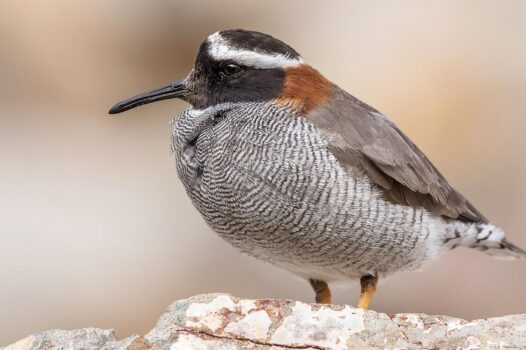
Magellanic Plover Pluvianellus socialis
Sandpipers & Allies | Scolopacidae
South American Snipe Gallinago paraguaiae
Hudsonian Godwit Limosa haemastica
Whimbrel Numenius phaeopus
Lesser Yellowlegs Tringa flavipes
Ruddy Turnstone Arenaria interpres
Red Knot Calidris canutus
Sanderling Calidris alba
White-rumped Sandpiper Calidris fuscicollis
Baird's Sandpiper Calidris bairdii
Wilson's Phalarope Phalaropus tricolor
Seedsnipes | Thinocoridae
Gray-breasted Seedsnipe Thinocorus orbignyianus
Least Seedsnipe Thinocorus rumicivorus
Sheathbills | Chionidae
Snowy Sheathbill Chionis alba
Skuas & Jaegers | Stercoraridae
Chilean Skua Stercorarius chilensis
Parasitic Jaeger Stercorarius parasiticus
Gulls | Laridae
Dolphin Gull Larus scoresbii
Kelp Gull Larus dominicanus
Brown-hooded Gull Larus maculipennis
Franklin's Gull Larus pipixcan
South American Tern Sterna hirundinacea
Doves & Pigeons | Columbidae
Rock Dove Columba livia
Eared Dove Zenaida auriculata
Parrots, Macaws & Allies | Psittacidae
Austral Parakeet Enicognathus ferrugineus
Barn Owls | Tytonidae
Barn Owl Tyto alba
Typical Owls | Strigidae
Magellanic Horned Owl Bubo magellanicus
Austral Pygmy-Owl Glaucidium nanum
Short-eared Owl Asio flammeus
Hummingbirds | Trochilidae
Green-backed Firecrown Sephanoides sephaniodes
Kingfishers | Alcedinidae
Ringed Kingfisher Ceryle torquata
Woodpeckers & Allies | Picidae
Striped Woodpecker Picoides lignarius
Chilean Flicker Colaptes pitius
Magellanic Woodpecker Campephilus magellanicus
Ovenbirds | Furnariidae
Common Miner Geositta cunicularia
Short-billed Miner Geositta antarctica
Scale-throated Earthcreeper Upucerthia dumetaria
Band-tailed Earthcreeper Eremobius phoenicurus
Dark-bellied Cinclodes Cinclodes patagonicus
Gray-flanked Cinclodes Cinclodes oustaleti
Bar-winged Cinclodes Cinclodes fuscus
Thorn-tailed Rayadito Aphrastura spinicauda
Plain-mantled Tit-Spinetail Leptasthenura aegithaloides
Wren-like Rushbird Phleocryptes melanops
Lesser Canastero Asthenes pyrrholeuca
Cordilleran Canastero Asthenes modesta
Austral Canastero Asthenes anthoides
White-throated Treerunner Pygarrhichas albogularis
Tapaculos | Rhinocryptidae
Magellanic Tapaculo Scytalopus magellanicus
Plantcutters | Phytotomidae
Rufous-tailed Plantcutter Phytotoma rara
Tyrant Flycatchers | Tyrannidae
White-crested Elaenia Elaenia albiceps
Tufted Tit-Tyrant Anairetes parulus
Patagonian Tyrant Colorhamphus parvirostris
Fire-eyed Diucon Xolmis pyrope
Chocolate-vented Tyrant Neoxolmis rufiventris
Dark-faced Ground-Tyrant Muscisaxicola macloviana
Cinnamon-bellied Ground-Tyrant Muscisaxicola capistrata
Austral Negrito Lessonia rufa
Swallows | Hirundinidae
Chilean Swallow Tachycineta meyeni
Blue-and-white Swallow Pygochelidon cyanoleuca
Barn Swallow Hirundo rustica
Wagtails & Pipits | Motacillidae
Correndera Pipit Anthus correndera
Wrens | Troglodytidae
House Wren Troglodytes aedon
Sedge Wren Cistothorus platensis
Mockingbirds & Thrashers | Mimidae
Patagonian Mockingbird Mimus patagonicus
Thrushes & Allies | Turdidae
Austral Thrush Turdus falcklandii
Old World Sparrows | Passeridae
House Sparrow ( I ) Passer domesticus
Siskins, Crossbills & Allies | Fringillidae
Black-chinned Siskin Carduelis barbata
Buntings, Sparrows & Allies | Emberizidae
Gray-hooded Sierra-Finch Phrygilus gayi
Patagonian Sierra-Finch Phrygilus patagonicus
Mourning Sierra-Finch Phrygilus fruticeti
Plumbeous Sierra-Finch Phrygilus unicolor
Canary-winged Finch Melanodera melanodera
Patagonian Yellow-Finch Sicalis lebruni
Rufous-collared Sparrow Zonotrichia capensis
Troupials & Allies | Icteridae
Long-tailed Meadowlark Sturnella loyca
Austral Blackbird Curaeus curaeus
M A M M A L S
Armadillos | Dasypodidae
Big Hairy Armadillo Chaetophractus villosus
Pichi Zaedyus pichiy
Rabbits & Hares | Leporidae
Old World Rabbit Oryctolagus cuniculus
Brown Hare Lepus capensis
Nutrias | Myocastoridae
Nutria Myocastor coypus
Camels | Camelidae
Guanaco Lama guanicoe
Dolphins | Delphinidae
Peale's Dolphin Lagenorhynchus australis
Chilean Dolphin Cephalorhynchus eutropia
Commerson's Dolphin Cephalorhynchus commersonii
Eared Seals | Otariidae
Southern Sea Lion Otaria byronia
Deer | Cervidae
Southern Andean Deer Hippocamelus bisulcus
Cats | Felidae
Puma Puma concolor
Dogs | Canidae
Southern Grey Fox Pseudalopex griseus
Culpeo Fox Pseudalopex culpaeus
Skunks | Mephitidae
Patagonian Hog-nosed Skunk Conepatus humboldti